One of the most important tasks for any product marketer or product manager is to develop deep expertise on their customers and prospects, market opportunities, and industry trends. In recent years, it seems that many marketers are gathering data from the same sources: CRM dashboards, social media chatter, and paid survey data.
Each of these three sources can offer valuable insights; however, all must also be seen for their potential weaknesses. CRM dashboards are only as good as the information that your team collects and offer a one-sided view of the world. Social media represents the opinions of only the most vocal, and platform limitations may require oversimplification of ideas. Paid survey data can be costly, and depending on the source, it’s not always reliable. There are plenty of sources that will sell you a report that claims your market is four times its real size and has a 40% CAGR. Their authors won’t be around when you have to defend those numbers.
Highly successful product marketers understand that research is the foundation on which their value propositions, product launches, and sales enablement assets are built. I have always felt like my success was directly attributed to my uncovering and leveraging better information than my counterparts at other companies.
This process has taught me that the richest insights often hide in plain sight. In the case of government data sources, the information available is directly tied to the purpose for which it is collected – most often regulatory compliance or economic forecasting. In other cases, data is available as a byproduct of other workstreams, such as customer support forums.
In the same way that we reject grossly overstated market research reports created to confirm overly optimistic growth projections, we must view these resources through a lens that seeks accuracy first and foremost. Understanding the purpose of data collection and how that might impact the subjects’ motivations to overstate, understate, or misclassify information is as important as locating the information in the first place.
With that caution in mind, here are seven examples of datasets that offer depth and accuracy of information, early indicators, and narrative nuance that can reshape how you plan, position, and message. Not all of them are appropriate for every inquiry; however, most projects will benefit from one or more of them.
Here are seven sources that can deliver useful information, each with a distinct lens on customer behavior, market movement, or competitive strategy:
1. U.S. Bureau of Labor Statistics Track workforce shifts, consumer spending, and regional trends with hard data. The online data manipulation tools can be clunky, but nearly everything can be cut by NAICS codes. This makes vertical market research much more accurate. (NOTE: BLS data is US-specific. However, there are similar international datasets from such sources as OECD, World Bank, and Eurostat.)
2. SEC Filings and Investor Presentations Uncover strategic priorities, competitive positioning, and segment growth straight from the source. SEC filings include both financial data and management narratives. The tone is usually optimistic, but the underlying story usually reflects reality.
3. Patent Filings (USPTO or Google Patents) and Trademark Applications (TESS) Spot innovation (patents) and brand moves (trademarks) before they hit the market. If your competition is seeking a new trademark, it usually means that they are launching a new product or feature. Monitoring applications can help you avoid being caught unprepared.
4. Local Chamber of Commerce Reports Get boots-on-the-ground intelligence about regional investments and business dynamics. While such localized information tends to have little impact on the line-of-business level, it can be valuable for solutions that require state-level strategy, such as compliance or legal research products.
5. Customer Support Forums and Review Aggregators Mine raw sentiment and unmet needs from real users in their own words. Online reviews tend to be top and bottom-heavy, but they are valuable in ascertaining a product’s relative strengths and weaknesses.
6. Trade Association Reports and Member Briefings “Sit in” on events and conversations among the participants in your target market. Annual reports do a great job of digesting the mood of the industry and how they view their near future.
7. Academic Research Portals Tap into behavioral insights and conceptual frameworks that challenge conventional thinking. Most academic research is dense and loaded with jargon. However, everything within it must be cited, and there can be gold hidden in the footnotes.
While one of these sources may provide useful information, it is often useful to layer sources to build a complete picture. Industry reports may offer direction, while BLS numbers may confirm that the trend has been in motion for a year or two.
One of the luxuries that 21st-century product marketers have is the availability of digital clipping services. Services such as Google News Alerts, Yahoo Alerts, Talkwalker Alerts, and other paid tools automate the process of information gathering. Monitoring your competitors’ names for trademark filings or press releases can deliver valuable information into your inbox without your having to do active periodic searches. You don’t waste time when there’s no news, and you have quick access when there is. With tools like Evernote and Notion to store and classify information that will have future value, it’s very easy to make information gathering a passive workstream when you are working on more urgent matters. These tools offer robust tagging tools that allow you to group insights by vertical, persona, or funnel stage, making them easier to activate later.
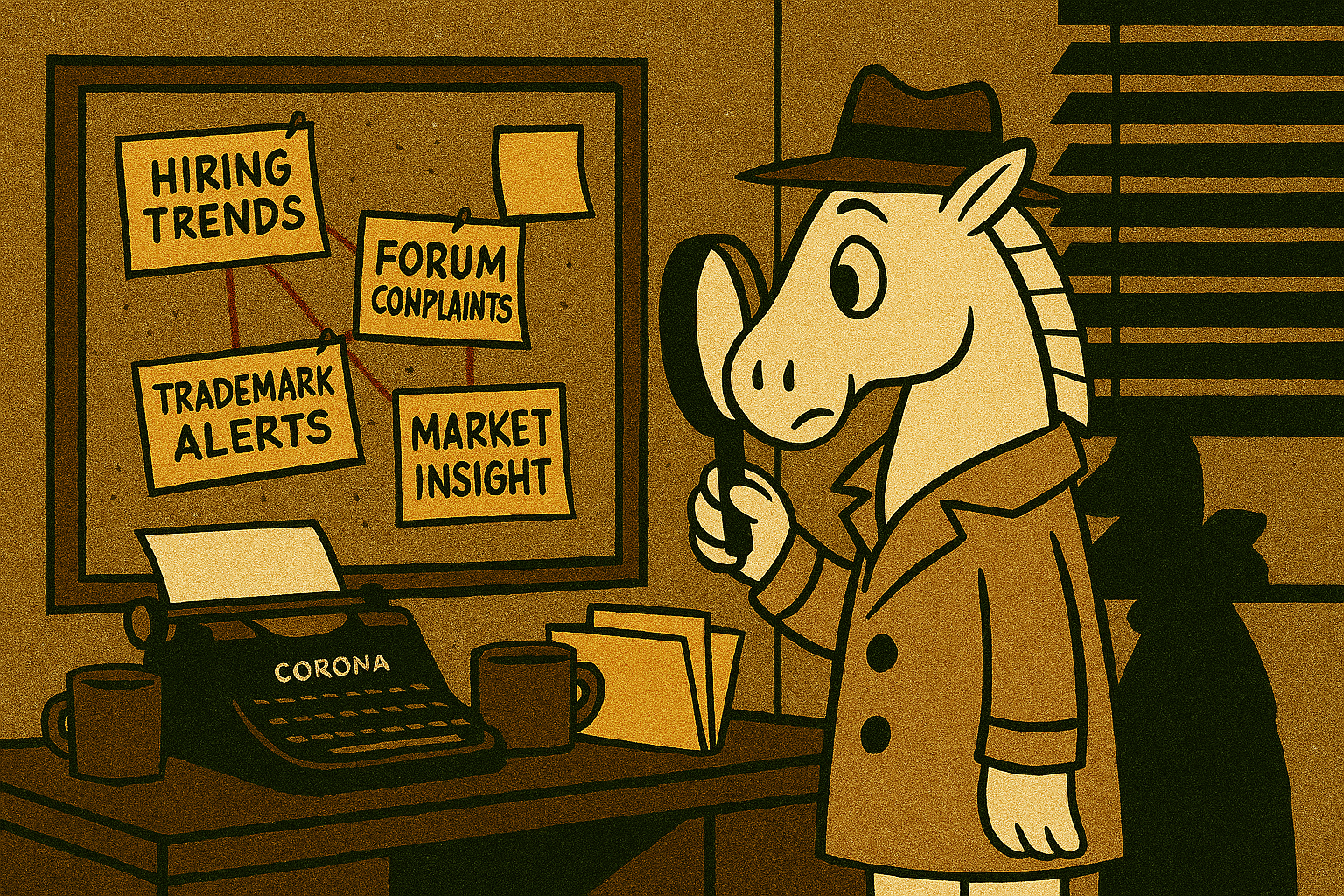
Like any good market detective, the key isn’t just finding data. It’s also important to interpret that data and understand how it is impacted by context. However, locating the data is the first and often most difficult step in this process.
If you use other underappreciated information resources for product marketing or product management, please share them using the contact page, and I will share those additional ideas (with full attribution) in a future post.