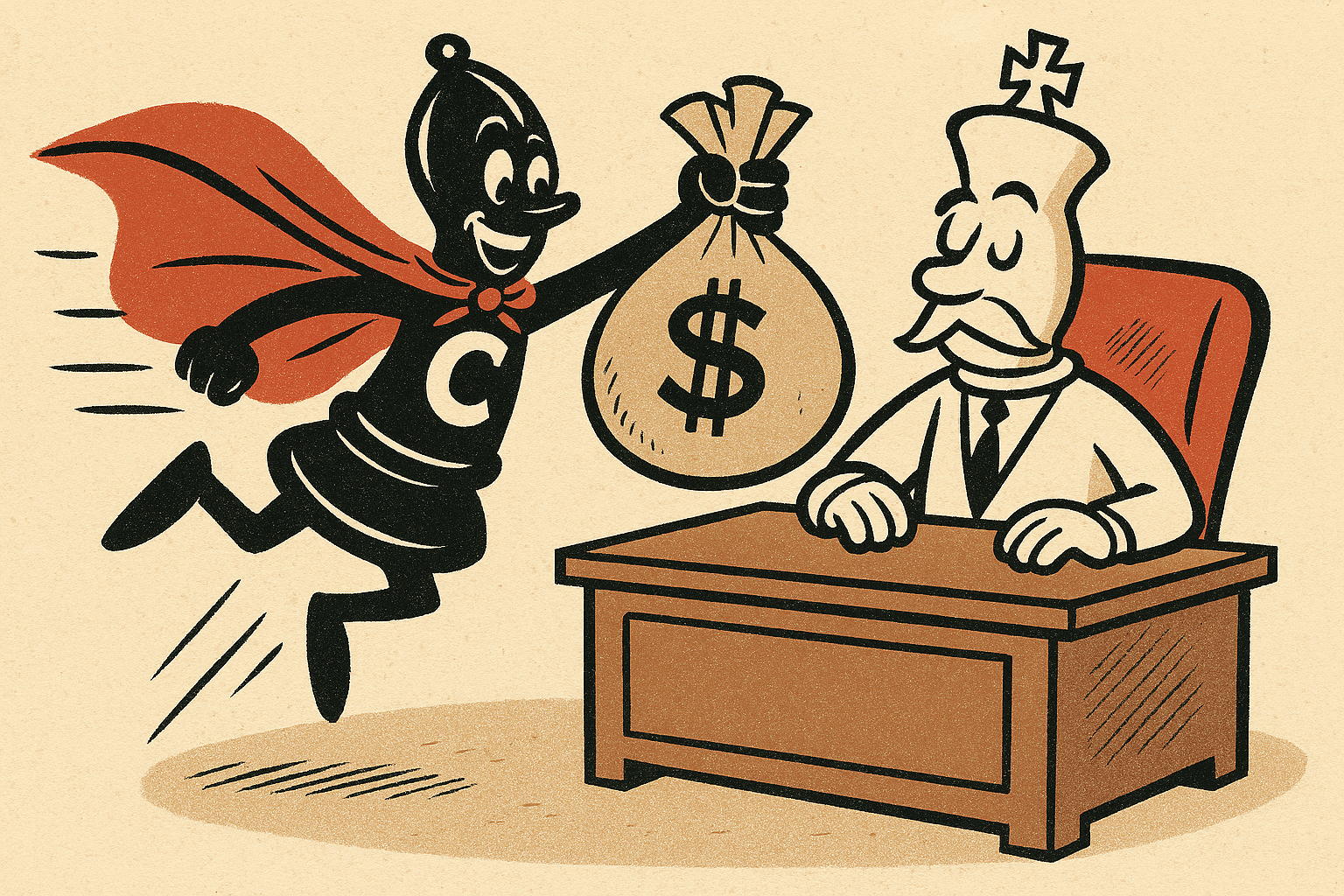
So here I am at put-up or shut-up time. I began this series with an indictment of boring B2B marketing. I followed with an appreciation of some of my favorite B2C campaigns. Now, it’s time to demonstrate how great stories can improve B2B marketing. This is the point in the story where I succeed or fail.
As noted in Part 1 of this series, actually using a story can feel riskier than just creating a headline supported by features and benefits. This is usually due to the need for cross-functional internal buy-in. Most notably, messaging needs the support of colleagues in product and sales. Product teams need to know that their efforts are seen as delivering value. Sales teams need to believe that marketing work is building and accelerating their pipeline. These expectations, and the fear that their colleagues will better understand a more literal approach, make many B2B marketers nervous about actually employing stories to deliver their message.
While countless marketers describe themselves as storytellers, almost no one in product or sales roles does. This means that marketers who deliver standard feature/benefit messaging are speaking in a language that they know their cross-functional colleagues understand. Using a story to illustrate the value of a product or service may require the marketer to defend their story-based messaging to an audience that isn’t accustomed to hearing it in that format. It also means that the story must be readily understood. Gaining internal support for story-form messaging will require iteration and additional time. However, the tension created by internal feedback will require the marketer to craft a better story. And isn’t that exactly the point?
A story that isn’t relatable or lacks relevance to the target market will not resonate. And a message that doesn’t resonate will not draw your audience into the marketing funnel or build your sales pipeline. However, as online search yields to AI, it will be more important than ever to employ messaging that stands apart from your competitors, and doesn’t just describe your solutions using the same language that they do. In an SEO world, the winner is the company that uses the most searched-for terms most often. As AI-driven discovery tools reshape how people find information, clarity, context, and coherence will matter more than keyword repetition alone.
A compelling B2B story requires empathy and clarity. It invites the audience into a recognizable moment shaped by tension, transformation, and relevance, without relying on theatrics or exaggeration. The narrative should allow the reader to see themselves in the journey and draw their own conclusions. When done well, it builds trust not by selling, but by resonating.

Here are eight considerations that will make storytelling more effective, both with customers and with internal audiences:
1. Tell the story of a person, not an event.
Humanize a decision rather than telling an end-to-end tale. When your customer is the centerpiece, you don’t need high-stakes drama. You just need to show how the protagonist overcomes the status quo and changes for the better. That’s the transformation your audience wants to see.
2. Start where the buyer already agrees with you.
Instead of opening with a problem statement, begin with a belief your audience already holds true. This can be an empathetic recognition of their challenging environment, an acknowledgement of a social good that comes from their company’s work, or a reference to changes impacting their customers. When the story affirms their worldview before challenging it, resistance drops, both externally with buyers and internally with sales and product teams.
3. Make the obstacles clear but not foreboding
Your audience should recognize the challenge, not recoil from it. If you’ve done the research, they’ll see themselves in the tension. But if the stakes feel too dire or exaggerated, they’ll disengage. Evoke a sense of victory in your reader rather than one of fear. Make it clear from the outset that the story has a happy ending.
4. Anchor in a moment, not a monologue.
Instead of listing benefits, show a single moment of change: the email sale that was closed, the customer that was retained. You’ll have plenty of chances to highlight benefits once the prospect is engaged and ready to learn more.
5. Respect the buyer’s competence.
Avoid stories that imply the buyer was naïve, careless, or “doing it wrong.” Remember, to engage your buyer, you must make them the hero, not the victim. Strong B2B stories assume intelligence and intent, and demonstrate how context changed, not how judgment improved.
6. Frame the stakes in terms of momentum, not survival.
B2B buyers rarely face existential threats, but they constantly battle inertia. Instead of painting a do-or-die scenario, show how your solution helps them move faster, smarter, or with more confidence. A story in which the buyer is doomed without your help will likely be viewed as an exaggeration, and your credibility will be questioned.
7. Make the product the guide, not the hero.
Your customer is the protagonist. Your product is the mentor, the map, the tool that helps them win. This framing reduces the pressure to glorify features and instead focuses on transformation. The transformation is a victory for the prospect. They need to see themselves as the winner and not just a beneficiary of the value of your solution.
8. Design stories for retelling.
If a sales rep can’t summarize the story in one sentence and reuse it in a conversation, it’s unlikely that your customer can either. If that’s the case, it’s too complex. You should be able to tell the shortest version of your story as you would an elevator pitch. Great B2B stories travel well; they survive retelling, compression, and translation across teams.
B2B marketing doesn’t need to be dull and formulaic. As you develop nurture content and sales enablement assets for the middle and bottom of the funnel, the tried and true exposition of customer benefits and the features that deliver them will have a critical role in closing business. But, in an era where the volume of digital noise is an obstacle that confronts all marketers, engaging and thought-provoking stories will continue to grow in importance.