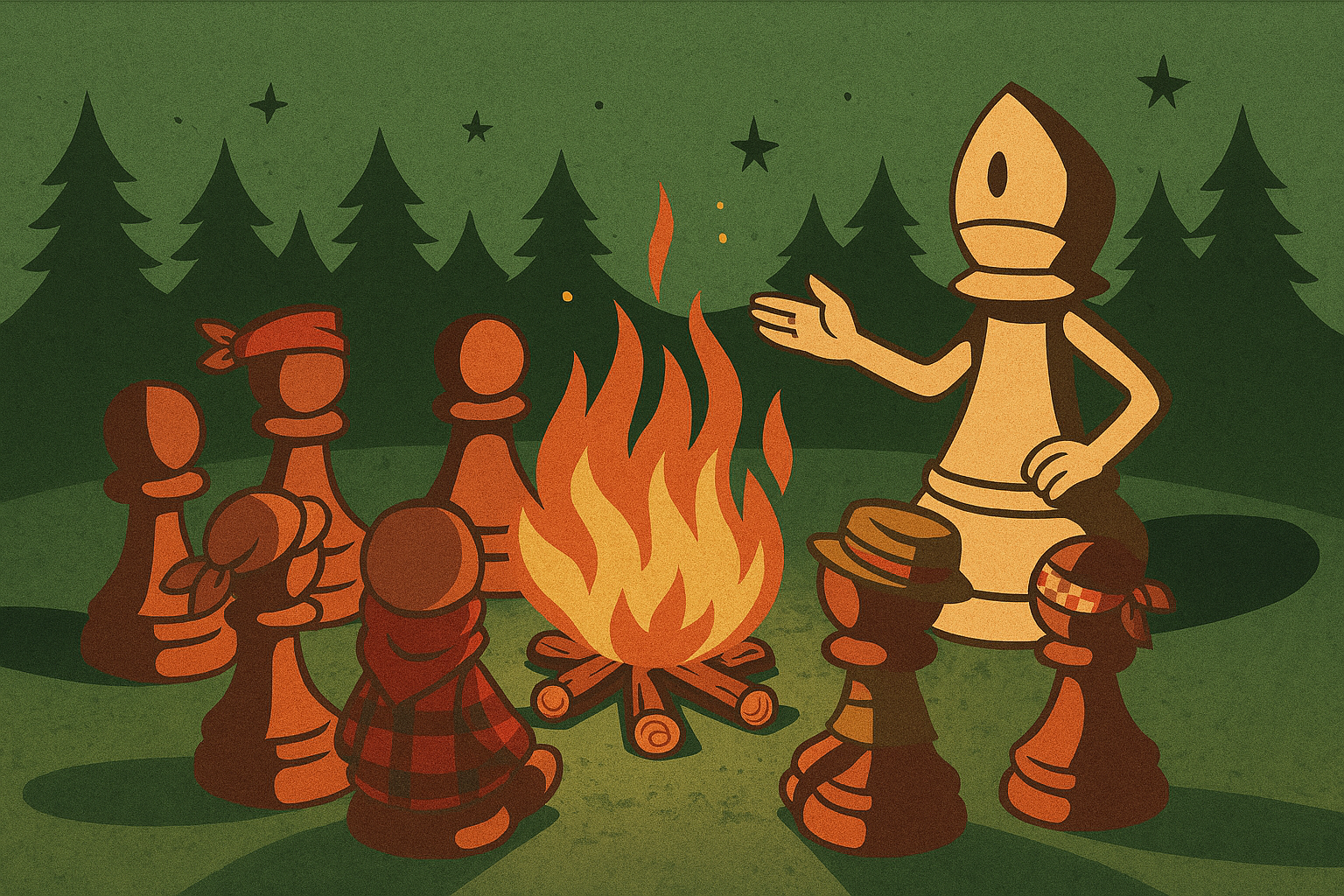
Scroll through LinkedIn and you’ll find a sea of marketers proudly calling themselves “storytellers.” It’s a very trendy professional virtue signal. But dig into most actual B2B marketing and the story disappears. What you’ll find instead is brochureware with a headline built by committee: no tension, no character, no narrative arc. Just a list of features dressed up with adjectives.
The Disconnect: Most B2B marketers say we love storytelling. We say it builds connection, drives emotion, and creates differentiation. But when it’s time to publish, we flinch. We default to safe language, sanitized personas, and bullet-point benefits. Why? Because storytelling requires vulnerability. It asks us to take a position, to show something real, and to risk being misunderstood.
Because there are two sides to every story, there’s always a chance a prospect won’t align with your narrative. Despite research and analysis, many B2B marketers lack the confidence to launch a truly differentiated, story-based campaign. Sterile language feels safer, harder to misinterpret, and easier to defend.
The B2B Trap: In B2C, storytelling is often playful, ironic, even absurd. (I will discuss some of my favorites in the next installment.) But B2B operates under different constraints: longer sales cycles, more stakeholders, and a fear of being “off-brand.” So we retreat into the familiar. We write for the procurement team instead of the person with the problem. We prioritize detail over relevance. We ignore the person whose life we can change. And we end up sounding like everyone else.
Safe branding doesn’t just blend in: it disappears. In a digital landscape dominated by algorithms, safe content is reduced to noise. It lacks the edge, emotion, or specificity needed to break through. And with AI now filtering, summarizing, and prioritizing content before a human ever reads it, being in the center of your industry’s content mix is like muting yourself. If your message doesn’t provoke empathy or interest, it won’t be surfaced. It won’t be remembered. It won’t be read.
What Storytelling Actually Requires:
- A point of view. Not just what you do, but why it matters to your audience.
- A protagonist. Someone your audience can see themselves in.
- A moment of tension. What’s at stake if they don’t act?
- A resolution. Not just a product, but a transformation.
The Risk-Reward Curve of B2B Messaging
| Messaging Style | Risk Level | Differentiation Potential |
|---|---|---|
| Feature-Benefit Copy | Low | Low |
| Sanitized Persona Story | Medium | Medium |
| Empathetic Narrative | Medium | High |
| Bold Cultural Story | High | Very High |
Why It Matters: Storytelling isn’t fluff. It’s how we make sense of the world. It’s how we remember things and decide what’s worth caring about. And in a crowded market, it’s the most likely way to be remembered. While B2B marketers will never have the same latitude that B2C marketers do, there are ways to tell stories that differentiate without placing risky bets.
Closing Thought: Either we believe storytelling works or we don’t. If you don’t, stick to feature-benefit language and blend in with every competitor using the same words. But if you do believe, then trust it. That means putting on your prospect’s role and living in it. It doesn’t have to be funny. It doesn’t have to be dramatic. It just has to be empathetic. Make that person the hero. That’s what real storytelling looks like.
In part two of this series, I will discuss some clever B2C story campaigns and why they work. In part three, I will offer some guidelines on how to reduce risk when placing messaging into a story framework.
Find this content useful?
Subscribe to PositionedtoWin and be notified as new content is published
✓ once weekly emails