Ask someone outside of product marketing what the function does, and it’s likely that they aren’t quite sure. Even inside smaller companies, unless you’re in sales, product, or marketing leadership, it can be invisible because the Product Marketing function is often not defined by deliverables that are familiar to the broader organization. Product marketing can be everywhere but rarely noticed. But when it’s missing, everyone feels it.
The BASF Analogy: We Don’t Make It, We Make It Better
In the 1980s and 1990s, BASF, the world’s largest chemical company, ran a campaign that perfectly captured its role: not the star on stage, but the force that made the performance shine. BASF wasn’t a household name like Adidas, Toyota, or Boeing, but as the world’s leading chemical company, it became famous for enabling the success of the products people did recognize. Their tagline, “We don’t make the products you buy. We make the products you buy better,” continues to be studied as an outstanding use of ingredient branding.
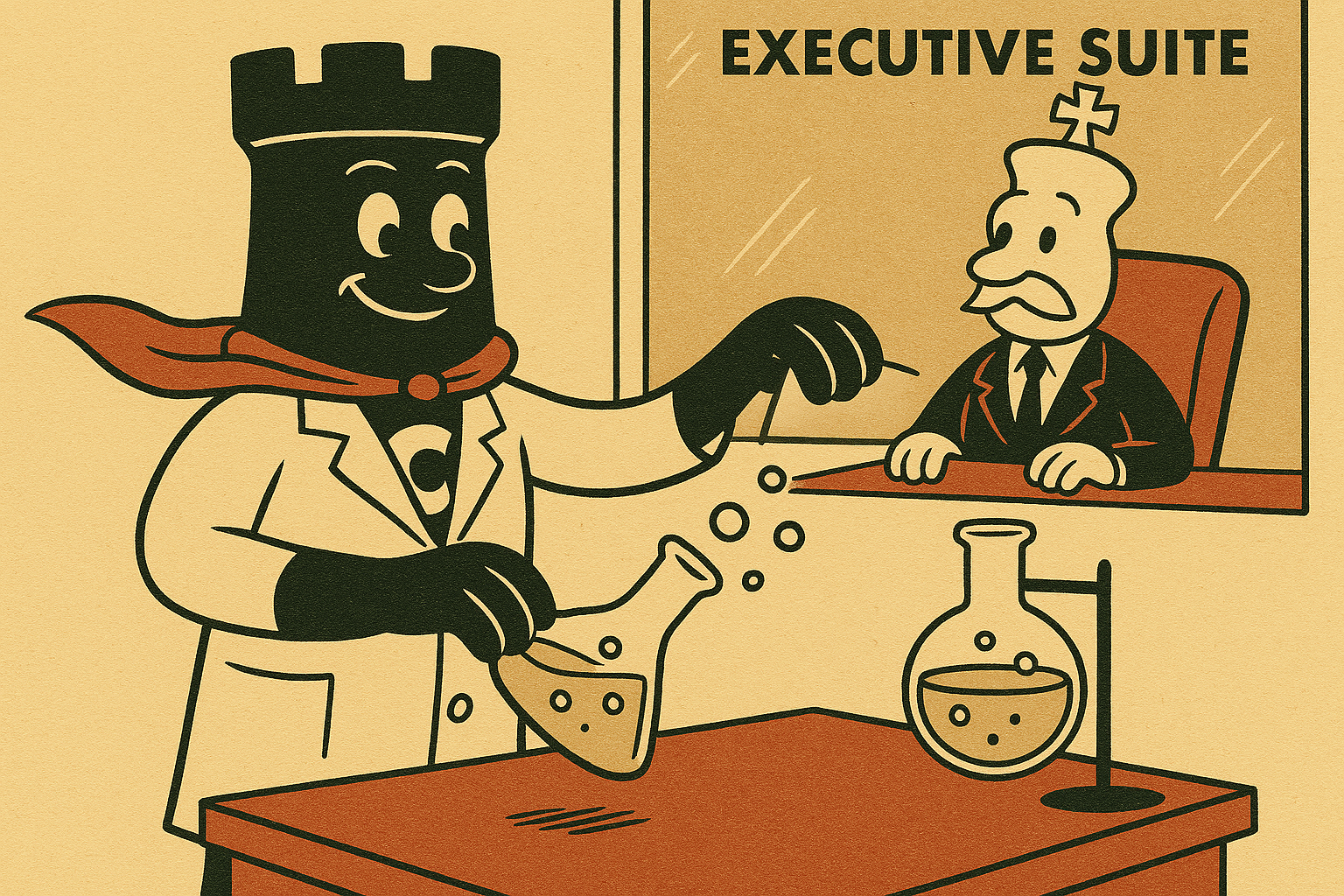
The BASF tagline perfectly summarizes product marketing. We don’t make sales calls. We don’t (usually) run campaigns. We don’t conduct demos. But we create the fuel that helps make those activities more successful. Competitive intelligence, positioning, and messaging are the multipliers that optimize our colleagues’ interactions with customers, prospects, and the broader market. We’re the ingredient brand that lives inside the go-to-market engine.
Turning Expertise into Influence
In my experience, product marketing is the convergence of domain expertise and knowledge of how the organization goes to market. Some product marketers begin as subject matter experts and learn to craft a compelling story. Others start as marketers and dig deep until they become trusted voices for their products. Sitting at the intersection of understanding and influencing, the best product marketers stand in the shoes of many others and constantly consider how they can make their colleagues more successful.
Product marketing requires curiosity. Knowing your product is not enough. You must also understand buyers and influencers, the market, the competition, and the technical ecosystem, and then weave those threads into a narrative that moves people.
The Impact of Industry, Company Size, and Reporting Structure
Product marketing roles vary in their scope depending on three primary factors:
- Industry- Physical product marketing focuses on tangible features and managing inventory and shipping, while software marketing emphasizes user benefits and customer retention through digital delivery and ongoing engagement.
- Company Size- In larger companies, product marketing is more specialized, while small company product marketers often do hands-on demand generation and other “full stack” activities.
- Reporting Structure-
- When product marketing reports into the CMO, it usually prioritizes market messaging for demand generation, sales enablement, and campaign execution.
- When product marketing reports to the CPO, it is often tightly aligned with the product roadmap, focusing on research to support go-to-market strategy, product and feature launches, and product-led growth.
- When reporting into sales, product marketing focuses on enablement, which can blur the lines between strategic positioning and tactical sales support.
Competencies That Matter Regardless of Context
Because product marketing is a company’s “ingredient brand,” and its output less tangible than demand generation or sales; it can be trickier for less experienced product marketers to prioritize their work. With that in mind, I believe that success as a product marketer can be broken down into three job components: expertise, evangelization, and collaboration.
Organizations vary greatly in how product marketing is organized, its deliverables, and the cadence of its activity, but nearly every product marketing success metric falls into one of these three categories. Regardless of the context, an overview of these three workflows can help product marketers stay focused on work that matters.

Expertise: Digging the Deepest
All product marketers engage in the relentless pursuit of understanding. Alongside product management, we’re the team that “digs the deepest.” We must become experts on market sizing, customer pain points, market shifts, technical specs and integrations. And we immerse ourselves in the details, not knowing exactly when a piece of insight will prove critical in generating a lead or closing a sale.
Product marketing expertise requires strategic foresight. Buyers are more informed than ever, and surface-level messaging doesn’t cut it. To win, product marketers must anticipate objections, articulate differentiators, and craft narratives that speak to both logic and emotion.
Most of this work happens before anyone sees the output. Expertise is earned by spending hours analyzing competitor roadmaps, interviewing customers, and synthesizing feedback into positioning frameworks. It’s the quiet diligence that enables bold storytelling.
Time spent developing expertise on relevant topics is highly valuable. It will enhance your deliverables and credibility. Organizing your information is also a very worthwhile time expenditure, as having access to all of the data you’ve collected will make your outputs stronger.
Evangelization: Your Story and Your Audience
At the end of the day, the true currency of product marketing is twofold: expertise and the ability to translate that expertise into messaging that motivates people. It’s not enough to know the product inside and out; you have to make others care. That means crafting narratives that inspire confidence in sales teams, spark curiosity in prospects, and reinforce trust among existing customers.
Many people use the term “translation” to describe product marketing output. I prefer “evangelization”. Translation implies a discrete statement and audience. But for product marketers, the only limitation on the story and audience is diminishing returns. It’s essential to connect your message with sales teams and prospective customers. But your story is equally appropriate for analysts, social media followers, and people you meet in elevators.
This translation is both art and science. It requires empathy to understand what matters to your audience, creativity to frame your story compellingly, and discipline to ensure consistency across every touchpoint. When done well, it turns complexity into clarity and clarity into action.
Collaboration: Aligning the Organization
Product marketing falls apart the moment it begins operating in a silo. Its entire value comes from being the connective tissue between what the product can do, what the market actually needs, and what sales must say to win. It is the tapestry woven from these threads that creates a respected brand, a strong competitive position, and messaging that resonates with its audience.
When silos develop, those threads snap. Product teams ship features without a narrative, sellers chase deals rather than strategically prioritizing their efforts, and customers encounter a story that meanders, lacks valuable information, or even repels them. While product and sales must also collaborate, without the product marketing perspective, those interactions often focus on myopic, short-term goals. This isn’t always the case, but the risk is real.
Product marketing only works when it is connected across the business, absorbing buyer insight, shaping product decisions, and translating strategy into messages that move revenue. In the BASF piece, this reinforces your core point: visibility without integration is just noise.
Why This Matters Now
In an era of rapid innovation and shifting buyer expectations, the role of product marketing has never been more critical. Companies need voices that can bridge the gap between technical truth and market relevance. They need professionals who can dig deep, think broadly, and communicate clearly. AI can assist with many tasks, but the depth of reasoning required to be a truly successful product marketer is not one of its strengths presently. Leaving messaging to AI risks turning your signal into noise.
So the next time someone asks what product marketing really does, consider the BASF analogy. We may not make the product, the campaign, or the call—but we make them better. And in a competitive market, that difference can be everything.